

By Rebecca Jones and Richard Dallison (Bangor University)
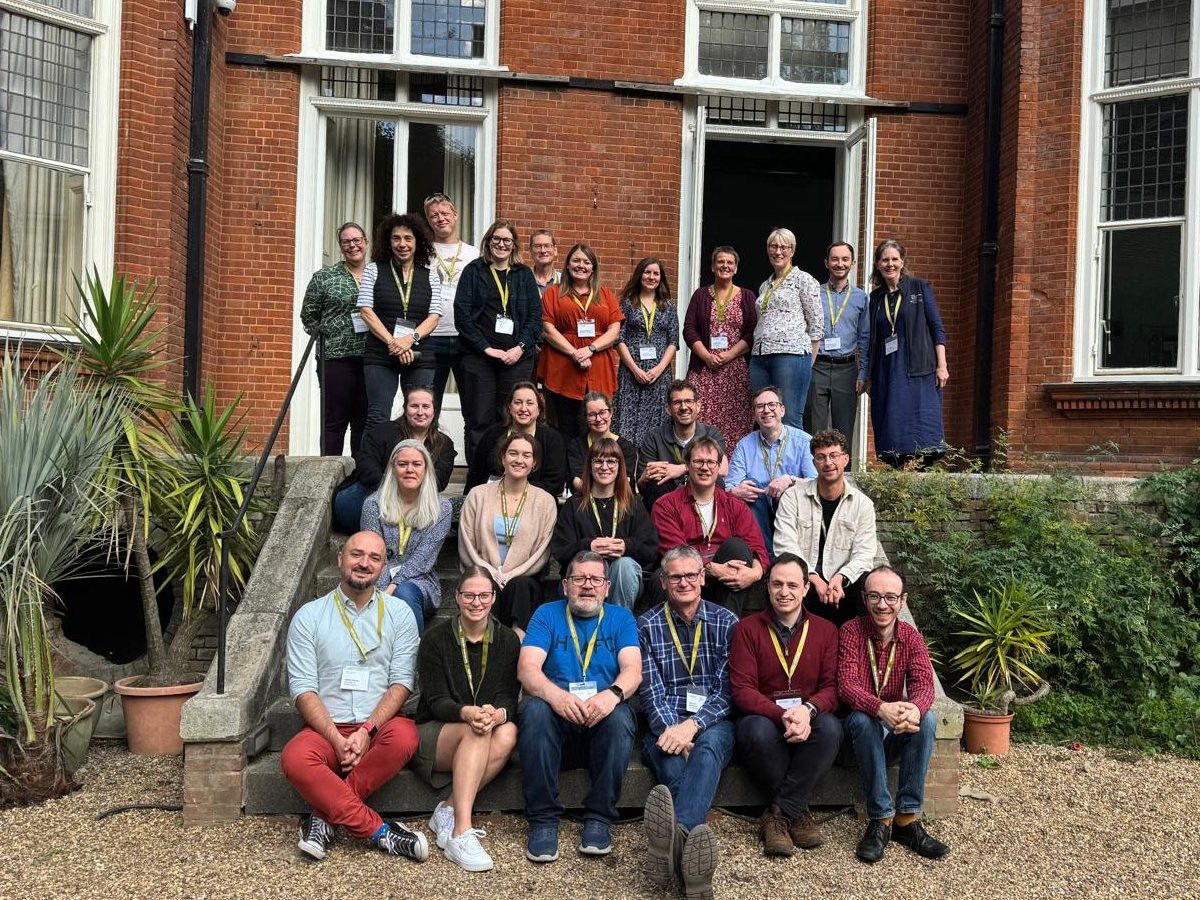
The 14th Enhancing Fieldwork Learning (EFL) Showcase was kindly hosted by The Royal Geographical Society (with IBG) in London and online on the 10th and 11th of September 2024 with support from ESRI UK and the British Ecological Society. The theme for this year’s showcase was ‘The future of HE fieldwork practice and teaching’, a rich and wide-reaching topic which provided plenty of discussion and food for thought. Here, Rebecca Jones and Richard Dallison (Bangor University) reflect on the event and draw out some of the key themes from the presentations and subsequent discussions.
The showcase began with welcomes from Derek France (EFL/University of Chester) and Shane Winser (RGS) and was followed by the first keynote, Ewan Woodley (University of Exeter). Ewan discussed the future of field course pedagogy in UK higher education, highlighted the current unsustainable nature of fieldwork and outlined the principles of Universal Design for Learning in fieldwork practice. He noted the stark contrast in approaches between institutions and the need for fieldwork planning to be undertaken by a wider group of stakeholders than just academics.
The following session’s theme was equality, diversity and inclusion in fieldwork, and featured two talks. The first talk focussed on the design and delivery of accessible fieldwork (by Andrew Suggit – Northumbria University), and the second on the potential role of Virtual Reality in enhancing fieldwork in the context of improving accessibility (Rebecca Jones & Richard Dallison – Bangor University). These presentations highlighted the need for more guided models for fieldwork accessibility and ways to facilitate student reflection in order for them to gain a deeper understanding and appreciation of the fieldwork.
To enliven everyone after lunch, delegates explored a small corner of Hyde Park, with Danni Hill from Treeconomics leading the group in a practical assessment of tree health. The session highlighted the important role of trees in urban environments and the fieldwork opportunities therewithin. After this we returned to the RGS to wrap up the day with short talks from Julian Martin and Anna Lawrence (RGS), David Morgan (Esri UK) and Dylan Byrne (British Ecological Society). These talks draw attention to fieldwork resources, funding opportunities, and the National Education Nature Park, and also encouraged delegates to submit their innovative work on fieldwork education to the Future of Fieldwork in a Changing World theme of Geo.
Day two began with a compelling keynote from Simon Hutchinson (University of Salford) in which he detailed his collaborative work using digital visualisation tools to support geographical education in Ukraine. Delegates learnt about the challenges, opportunities, practicalities and lessons learned from such innovative and valuable work, and were encouraged to share their digital resources with Simon for use in future work with Ukrainian students. Simon’s talk was followed by presentations from Natasha McGowen of Queen’s University Belfast, then Tereza Poncová from the University of West Bohemia. Natasha presented on recent work which integrated fieldwork teaching with a local environmental issue at Lough Neigh, working alongside collaborators from external organisations for mutual benefit. Tereza, meanwhile, spoke about her work developing a virtual field trip to explore an opencast lignite mine, and the detailed pedological process behind the endeavour which ensured high-quality educational outcomes for students. Rounding of the morning, Lynda Yorke (Bangor University) led the next session, a workshop encouraging discussion and feedback on the future of fieldwork teaching. This session drew further analysis of many of the key themes of the conference, including fieldwork accessibility (in various forms), the purpose of fieldwork, sustainability in field teaching and barriers faced by the sector in further developing field-based learning.
Following a productive lunch, with many lively, collaborative and valuable conversations, attentions turned to employability and the development of technical and transferable skills through fieldwork and associated activities. Liz Hurrell (University of York) started the session by looking at how environmental challenges can be tackled using solutions-focussed, multidisciplinary, role-play field module. Liz’s talk detailed the practicalities of this approach and highlighted the need to not only design fieldwork to have less negative impact, but in fact some positive impact. Natasha McGowen (Queen’s University Belfast) then returned to present work looking at how to ensure technical and transferable skills are embedded in teaching to improve outcomes for bioscience students. This was followed by Dan Swanton (University of Edinburgh) who spoke on a manifesto for fieldwork. Dan’s talk discussed that while fieldwork is a signature pedagogy in geography, earth, and environmental sciences studies, we must still confront the climate and nature crisis in our approaches. Fieldwork may be key to worldly and ethical education, but it must be ethical and inclusive in its approach, potentially requiring a radical shift in delivery methods, including the use of digital and immersive technologies.
The stimulating final session focussed on one of education’s current hot topics, generative artificial intelligence (Gen AI). Lesley Batty (University of Birmingham) started these discussions with an engaging talk on AI in relation to fieldwork. Lesley encouraged the group to think about the appropriate use of AI in fieldwork settings, as well as to remember ethical issues associated with the technology, such as high energy and water use, IP infringement, and jobs replacement. Katharine Welsh and Laura Milne (University of Chester) also spoke on this topic, on the theme of ‘Gen AI – Field Assistant of Fieldwork Frivolity’. Their presentation highlighted some of the challenges and opportunities presented by the technology in a fieldwork context, looking at opportunities in terms of substitution, augmentation, modification and redefinition. Both talks raised several important consideration and questions, giving plenty of food for thought at what is a potentially crucial moment for education, and fieldwork education in particular.
Several key discussion themes emerged on the showcase’s overarching area of focus (the future of HE fieldwork practice and teaching). Of particular note were: aeromobility and the sustainability of fieldwork travel; equality, diversity and inclusion (EDI) in fieldwork activities; and the responsible inclusion of digital technology & Gen AI to enhance fieldwork offerings. Other recurring areas of discussion focussed on the roles and purposes of fieldwork (skills development, employability, accreditation), as well as methods and strategies for the development and delivery of fieldwork, including collaboration with external partners and institutions.
Overall, we thoroughly enjoyed the showcase and appreciate the opportunity to share our learnings with the community. We would recommend the EFL showcase to anyone who incorporates (or is looking to add) fieldwork activities into their teaching. The future of fieldwork is now, and conversations and discussions at events such as this are vital to ensure that we are all working towards sustainable, equitable, valuable and meaningful fieldwork experiences across disciplines.
Further information about the talks can be found in the Abstracts Book:
 Enhancing Fieldwork Learning