Blog

Reflections on the 14th Annual EFL Showcase (2024)

By Rebecca Jones and Richard Dallison (Bangor University)

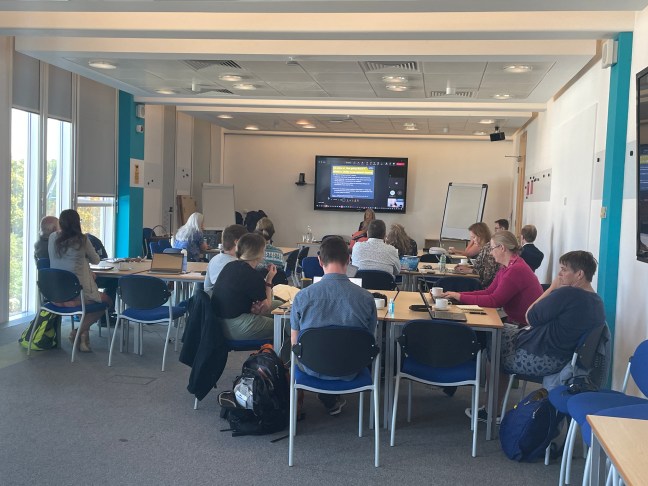
The 14th Enhancing Fieldwork Learning (EFL) Showcase was kindly hosted by The Royal Geographical Society (with IBG) in London and online on the 10th and 11th of September 2024 with support from ESRI UK and the British Ecological Society. The theme for this year’s showcase was ‘The future of HE fieldwork practice and teaching’, a rich and wide-reaching topic which provided plenty of discussion and food for thought. Here, Rebecca Jones and Richard Dallison (Bangor University) reflect on the event and draw out some of the key themes from the presentations and subsequent discussions.
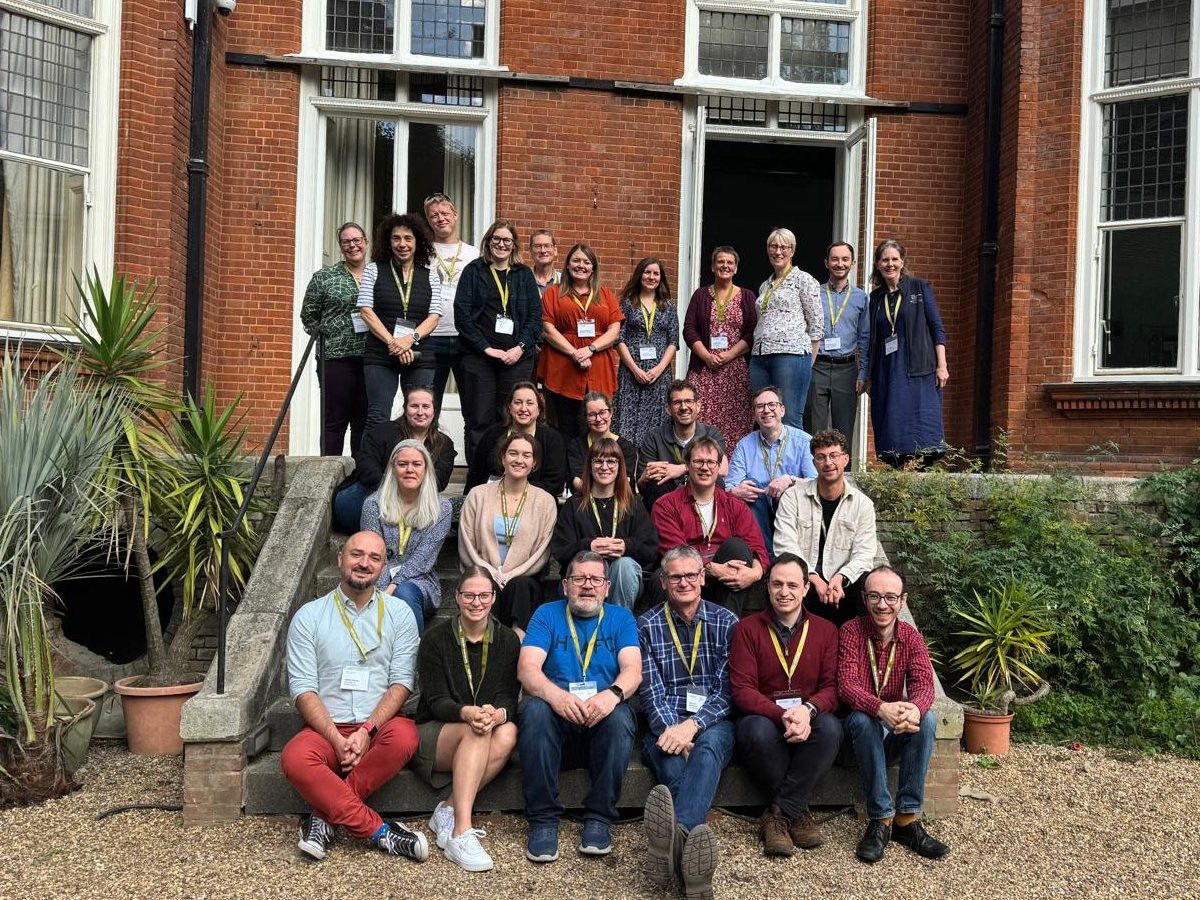
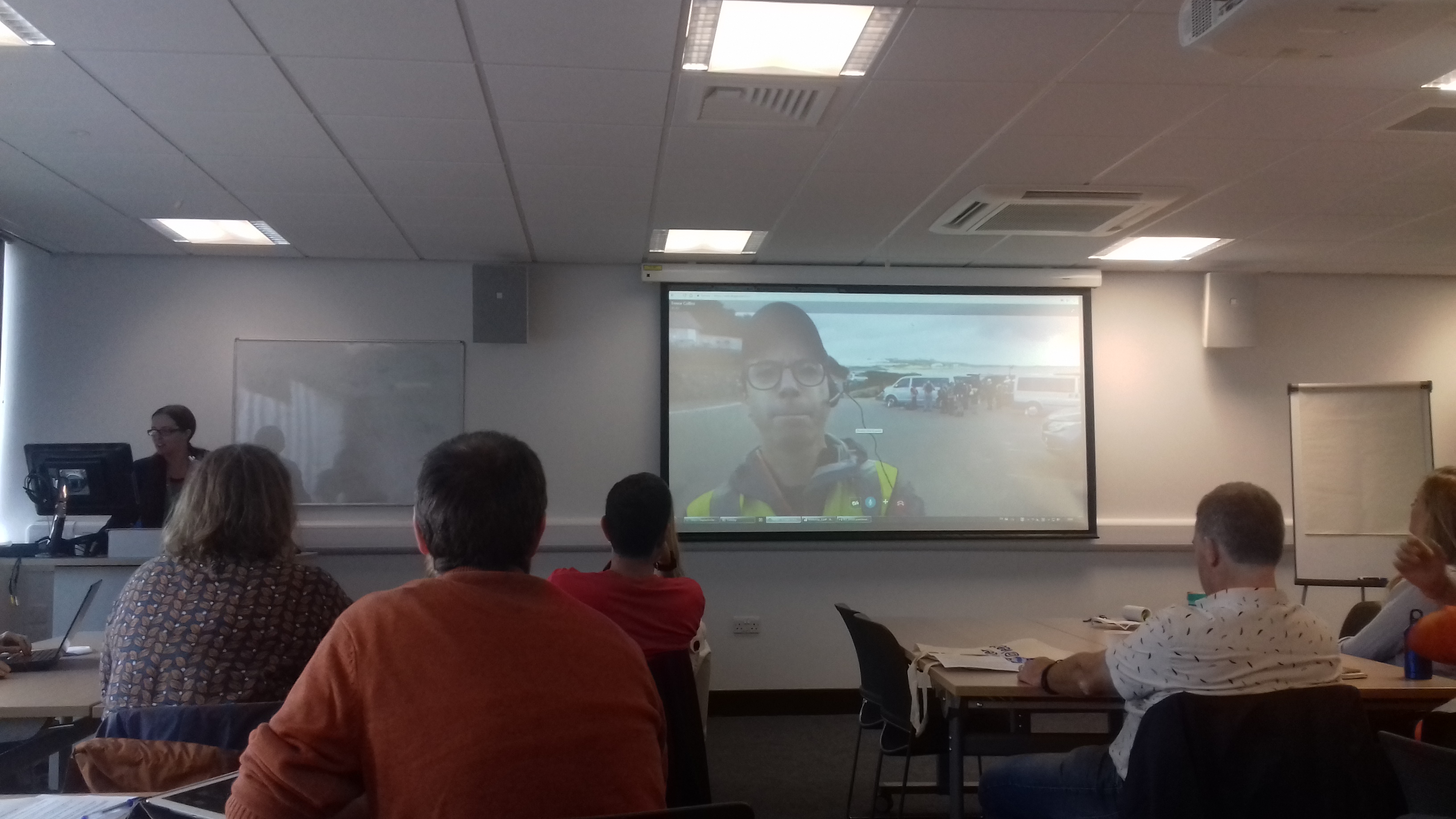
The showcase began with welcomes from Derek France (EFL/University of Chester) and Shane Winser (RGS) and was followed by the first keynote, Ewan Woodley (University of Exeter). Ewan discussed the future of field course pedagogy in UK higher education, highlighted the current unsustainable nature of fieldwork and outlined the principles of Universal Design for Learning in fieldwork practice. He noted the stark contrast in approaches between institutions and the need for fieldwork planning to be undertaken by a wider group of stakeholders than just academics.

The following session’s theme was equality, diversity and inclusion in fieldwork, and featured two talks. The first talk focussed on the design and delivery of accessible fieldwork (by Andrew Suggit – Northumbria University), and the second on the potential role of Virtual Reality in enhancing fieldwork in the context of improving accessibility (Rebecca Jones & Richard Dallison – Bangor University). These presentations highlighted the need for more guided models for fieldwork accessibility and ways to facilitate student reflection in order for them to gain a deeper understanding and appreciation of the fieldwork.

To enliven everyone after lunch, delegates explored a small corner of Hyde Park, with Danni Hill from Treeconomics leading the group in a practical assessment of tree health. The session highlighted the important role of trees in urban environments and the fieldwork opportunities therewithin. After this we returned to the RGS to wrap up the day with short talks from Julian Martin and Anna Lawrence (RGS), David Morgan (Esri UK) and Dylan Byrne (British Ecological Society). These talks draw attention to fieldwork resources, funding opportunities, and the National Education Nature Park, and also encouraged delegates to submit their innovative work on fieldwork education to the Future of Fieldwork in a Changing World theme of Geo.

Day two began with a compelling keynote from Simon Hutchinson (University of Salford) in which he detailed his collaborative work using digital visualisation tools to support geographical education in Ukraine. Delegates learnt about the challenges, opportunities, practicalities and lessons learned from such innovative and valuable work, and were encouraged to share their digital resources with Simon for use in future work with Ukrainian students. Simon’s talk was followed by presentations from Natasha McGowen of Queen’s University Belfast, then Tereza Poncová from the University of West Bohemia. Natasha presented on recent work which integrated fieldwork teaching with a local environmental issue at Lough Neigh, working alongside collaborators from external organisations for mutual benefit. Tereza, meanwhile, spoke about her work developing a virtual field trip to explore an opencast lignite mine, and the detailed pedological process behind the endeavour which ensured high-quality educational outcomes for students. Rounding of the morning, Lynda Yorke (Bangor University) led the next session, a workshop encouraging discussion and feedback on the future of fieldwork teaching. This session drew further analysis of many of the key themes of the conference, including fieldwork accessibility (in various forms), the purpose of fieldwork, sustainability in field teaching and barriers faced by the sector in further developing field-based learning.

Following a productive lunch, with many lively, collaborative and valuable conversations, attentions turned to employability and the development of technical and transferable skills through fieldwork and associated activities. Liz Hurrell (University of York) started the session by looking at how environmental challenges can be tackled using solutions-focussed, multidisciplinary, role-play field module. Liz’s talk detailed the practicalities of this approach and highlighted the need to not only design fieldwork to have less negative impact, but in fact some positive impact. Natasha McGowen (Queen’s University Belfast) then returned to present work looking at how to ensure technical and transferable skills are embedded in teaching to improve outcomes for bioscience students. This was followed by Dan Swanton (University of Edinburgh) who spoke on a manifesto for fieldwork. Dan’s talk discussed that while fieldwork is a signature pedagogy in geography, earth, and environmental sciences studies, we must still confront the climate and nature crisis in our approaches. Fieldwork may be key to worldly and ethical education, but it must be ethical and inclusive in its approach, potentially requiring a radical shift in delivery methods, including the use of digital and immersive technologies.

The stimulating final session focussed on one of education’s current hot topics, generative artificial intelligence (Gen AI). Lesley Batty (University of Birmingham) started these discussions with an engaging talk on AI in relation to fieldwork. Lesley encouraged the group to think about the appropriate use of AI in fieldwork settings, as well as to remember ethical issues associated with the technology, such as high energy and water use, IP infringement, and jobs replacement. Katharine Welsh and Laura Milne (University of Chester) also spoke on this topic, on the theme of ‘Gen AI – Field Assistant of Fieldwork Frivolity’. Their presentation highlighted some of the challenges and opportunities presented by the technology in a fieldwork context, looking at opportunities in terms of substitution, augmentation, modification and redefinition. Both talks raised several important consideration and questions, giving plenty of food for thought at what is a potentially crucial moment for education, and fieldwork education in particular.

Several key discussion themes emerged on the showcase’s overarching area of focus (the future of HE fieldwork practice and teaching). Of particular note were: aeromobility and the sustainability of fieldwork travel; equality, diversity and inclusion (EDI) in fieldwork activities; and the responsible inclusion of digital technology & Gen AI to enhance fieldwork offerings. Other recurring areas of discussion focussed on the roles and purposes of fieldwork (skills development, employability, accreditation), as well as methods and strategies for the development and delivery of fieldwork, including collaboration with external partners and institutions.

Overall, we thoroughly enjoyed the showcase and appreciate the opportunity to share our learnings with the community. We would recommend the EFL showcase to anyone who incorporates (or is looking to add) fieldwork activities into their teaching. The future of fieldwork is now, and conversations and discussions at events such as this are vital to ensure that we are all working towards sustainable, equitable, valuable and meaningful fieldwork experiences across disciplines.

Further information about the talks can be found in the Abstracts Book:
Pedagogic grants now available from BES


The British Ecological Society now offers Pedagogical Research grants to those involved in education to ensure that ecological education continues to be inspiring, innovative, and relevant to learners.  Applications are open twice a year in January (close in March) and July (close in September).

The grants will provide up to £5k towards research into evidence-based teaching and learning practices which improve learners’ experience while promoting excellence in teaching.

By funding research on education methods within ecology, the aim is to develop evidence to inform teaching and learning practices that improve the student experience. Recognising and supporting educational research will also promote excellence in teaching and encourage those not currently involved in educational research to engage.

The projects awarded should aim to do one or more of the following:

  • Provide evidence-based examples of innovative and effective practice in learning and teaching
  • Systematically review existing practices to produce evidence-informed recommendations
  • Explore emerging areas of education research to identify future needs/practices
  • Disseminate best practices in teaching and learning to other practitioners

Further information available here: https://www.britishecologicalsociety.org/funding/pedagogical-research-and-development-grants/

EFL Showcase 2023

It was a great first day at our 13th Annual Enhancing Fieldwork Learning Showcase event hosted at the University of Birmingham. Mark Nason, our first keynote, from CIEEM shared this great new resource for those looking for employment in the green sector https://lnkd.in/eghjjXWn.

We had talks from Lorraine Scott, Simon Docherty and Natasha McGowan at Queen’s University Belfast who talked about the importance of choice in the type of fieldwork undertaken, field based work placements and fieldwork as a mechanism for student development.

Phill Williams was our second keynote and talked about graduate and vocational pathways to employment and highlighted the strong attributes within the groups and those that employers identify as needing enhancement. Phill raised the question, how do we embed skills into fieldwork that are relevant to students who don’t/won’t go into ‘green careers’?

The session concluded with Alice Mauchline from the University of Reading introducing our fieldwork audit tool which we will update as a result of our discussions today. Current version can be found on our website: https://lnkd.in/eBeDwtkX

After lunch we headed to Woodgate Valley where Trevor Collins (Open University), Julia Cooke (Open University) and Lesley Batty (University of Birmingham) led a hybrid fieldtrip. You can visit the field sites virtually on this ThingLink tour: https://lnkd.in/eYwcfSeT

The purpose was to show how fieldwork can be more accessible to students (or in this case, participants) who cannot join physical fieldwork through the use of simple technologies and microphones to support live streaming. Participants in the field were acting on the instruction of those online and those online were interacting through chat/Teams via the live stream. Dissolved oxygen and air temperature measurements were taken. Kick sampling was undertaken, macro invertebrates were ID’d and an anenometer that had been mistaken for a flow meter was saved from submersion just in the nick of time! Our conference dinner in the evening was very enjoyable and kindly sponsored by ESRI.

Day 2 of our hybrid Enhancing Fieldwork Learning event started with a thought-provoking keynote from Karen Devine from the British Ecological Society who spoke about Career and Skills development for marginalised communities and outlined how they assumed they would fund skills development but actually need to fund practical access to the field for marginalised communities. This might look like childcare, bus fares to unpaid placements or basic field kit such as walking boots.

Janine Maddison from Newcastle University talked to us about their fantastic students as partners project #NCLlive, about the benefits of live streaming from the field. She spoke about future prospects of live stream to improve accessibility, address sustainability challenges and enhance the student experience.

Brian Whalley  outlined a range of case studies which highlighted how fieldwork can be used a simulation for employment situations.

Dave Morgan from ESRI outlined the brilliant work undertaken by ESRI to highlight how graduates can get into GIS careers. Find out more at his Storymap  https://storymaps.arcgis.com/stories/526126c46db246faa8ac00f3f7e587cf and brilliant Careers in GIS online resource for students and graduates: https://careerswithgis.co.uk/

After a brief coffee break we heard from an employer panel outlining what skills employers are looking for in graduates, where they feel there is a skills gap. The panel included Jackie Evans (ADAS), Beck Collins (Sustainability West Midlands), Andy Shaw (Environment Agency), Tom Docker (Middlemarch Environmental) and Susan Hartland Smith (Warwickshire Wildlife Trust).

In summary, the employers suggest they are looking for a holistic understanding of the job rather than very niche skills. Top skills outlined by our employer panel are people skills, the ability to bring people together, having the ability to persuade, being able to speak to the general public, good quality writing skills, time management, journey planning for fieldwork, team work, develop solutions and critical understanding of uncertainty in measurements.

Lorraine Scott from QUB joined us again for Day 2 to demonstrate her virtual field course which flipped traditional lectures into engaging virtual fieldwork and highlighted the benefits of this approach for inclusion and sustainability.

Our final keynote was from Shane Winser from the Royal Geographical Society who outlined how the cost-benefit of international fieldwork for student is important to consider alongside the carbon footprint aspect. She highlighted the RGS expedition database (https://expeditions.rgs.org/search.aspx) and world register of field centres (https://fieldcentres.rgs.org/FieldCentresMap.html) which are excellent resources for practitioners undertaking expeditions or fieldwork.

This has been another really thought provoking day of discussions with lots of ideas and practical tips to take away to enhance fieldwork learning and student employment. See you all next year for the 14th event! Details to follow on our project website: https://enhancingfieldwork.org.uk/

Blog post written by Katharine Welsh.

The 12th Enhancing Fieldwork Learning. Showcase – meeting report.

besteachingandlearning's avatarBES TEACHING AND LEARNING

The 12th Enhancing Fieldwork Learning (EFL) Showcase was held at The Open University and online on the 14 and 15th September 2022. Here Simon M. Hutchinson (University of Salford) reports on the event.

This Showcase was always planned as a hybrid event but, as function of a train strike and on-going COVID infections, ended up more online than probably initially anticipated. Nevertheless, there was both an ‘in the room’ and online presence and Team-based communications were skilfully handled to ensure all 78 participants had the chance to be part of the event.

The theme this year was ‘Towards achieving sustainability in fieldwork’ and the meeting was subdivided into 6 sessions with at least one Keynote each day as well as interactive sessions, demonstrations and a Padlet-based plenary. Here I aim to provide an overview of the meeting, but, as an online participant, I don’t have any insights into the Conference…

View original post 610 more words

Cultivate EDI fieldwork project

CULTIVATE was a NERC-funded project addressing digital technologies, equality, diversity and inclusion, and undergraduate field courses. The project aim was to grow an inclusive teaching environment for everyone in environmental sciences.

Online resources:

Booklet of 10 ways to make fieldwork more inclusive: 
English language version https://issuu.com/drlyndayorke/docs/10_ways_to_en_version.docx 
Welsh language version: https://issuu.com/drlyndayorke/docs/10_ways_to_cym_version.docx

The project was led by Dr Lynda Yorke (PI), Dr Simon M. Hutchinson (co-I) and Dr Liz Hurrell (co-I).

Contact details:
l.yorke@bangor.ac.uk ; s.m.hutchinson@salford.ac.uk ; liz.hurrell@york.ac.uk

Visit the CULTIVATE project website for more information

Research into the Future of Fieldwork in Higher Education

Background
We are interested in exploring the future of fieldwork teaching and learning in Higher Education. Therefore, we are conducting a research study into the changes to fieldwork teaching in HE that may happen over the next few years.

What is the purpose of the study?
There have been considerable impacts on our society and education system recently due to a range of factors. Looking ahead as our Higher Education system continues to adapt;
• What can fieldwork experiences contribute towards the education of our undergraduates?
• How can we maximise the benefits provided by this teaching and learning approach?
• What is the optimal way to deliver the best fieldwork experience for all students?


Who would we like to participate in the study?
We would like to gather the thoughts of two key groups:

  • Current undergraduates – via an online survey
  • HE practitioners – via conversations at the EFL Showcase in Sept 2021

Students – how can you be involved?
Students – to take part you can answer a short online survey that should take around 10 minutes to complete. There are several questions that ask about how you value fieldwork in your degree course and the form in which you would like it to be delivered. There are also questions that ask about skills development, funding and the sustainability of fieldtrips.

Student Survey Link

https://chester.onlinesurveys.ac.uk/student-questionnaire-future-of-fieldwork

Prize draw
Students – To thank you for completing the survey, there is a chance to win a £20 Amazon voucher. Please provide your email address if you are interested in taking part in the draw. One name will be selected at random from the list of completed surveys on the 29th October 2021. The winner will be contacted by email shortly after this date. If there is no response to our email within two weeks, there will be a re-draw and a new winner announced.

Further information for student survey participants

Further information for HE practitioners (at the EFL Showcase)

2020 Enhancing Fieldwork Learning Showcase reflections

besteachingandlearning's avatarBES TEACHING AND LEARNING


Reflections on the 2020 Enhancing Fieldwork Learning showcase from postgraduate researcher Janine Maddison (University of Newcastle, @janine_maddison). 

With Covid-19, conferences have had to adapt in 2020. The 10thEnhancing Fieldwork Showcase provided stimulating talks, interactive workshops, fieldwork and opportunities for networking. In fact, the only thing missing from a face to face conference was the pastries and fancy lunch.

Despite 2020 seeing providers and institutions hurriedly creating alternatives to their scheduled face to face fieldwork events, the response from the teaching community has been amazing, with many learning new skills, delivering in different ways and using technology to tackle some of the pedagogic challenges that fieldwork poses. The showcase provided a much-needed opportunity to break out of our individual silos, share successes and discuss challenges.

This was my first Enhancing Fieldwork Showcase, and it was scheduled perfectly, I have recently left my job at the Field Studies Council…

View original post 548 more words

Setting up a successful fieldcourse

Today we ran a workshop at the BES Annual Meeting on ‘Setting up a successful fieldcourse’. The slides are available here:

The idea was to facilitate peer-to-peer sharing of tips on how to set up a fieldcourse for those new to teaching. We were very lucky as roughly half the audience were experienced field educators who willingly shared their experience with those who were new to teaching. Working in small groups we considered top tips for pre-fieldwork, during fieldwork and post-fieldwork activities.

We have updated the slides with the suggestions from today (see above)  and the presentation concludes with lists of resources for both staff and students.

Many thanks to all who contributed to the discussions during the workshop and through conversations on Twitter. Happy Christmas!DuoayanW4AEHFiG.jpg large

Dun3rqyW4AAmUyo.jpg-large.jpg


Enhancing Fieldwork Learning Showcase 2018

The 8th Enhancing Fieldwork Learning Showcase was held at the University of Leeds and was hosted by Julie Peacock and Karen Bacon in the School of Geography on the 3/4th September 2018.

The event was sponsored by the Education, Training and Careers Committee of the BES, Water@Leeds and ESRI UK.
The 2018 Showcase event included a series of short presentations, field demonstrations of innovative field teaching, practical demonstrations of landscape visualisations, a horizon scanning exercise and (for the first time!) a live link-up to the field with Trevor Collins on the Access Anglesey Field Trip.
20180904_100211
The full programme is shown below and all talks are available on SlideShare. Reflections and photos from the participants on Twitter #efls18.

Decisions, decisions … the importance of choice and ownership and in fieldwork based learning (Graham Scott, University of Hull) Graham Scott gave a fantastic Keynote presentation to start the event which reflected on staff and student perspectives during fieldwork to find ways to increase student engagement, satisfaction and learning. Asking students what they want to learn can help to engage them in their learning on fieldwork while reflecting on drivers for lower motivation and developing a sense of autonomy can help to build confidence.

Invasive species, biosecurity and open learning (Alison Dunn, University of Leeds). Alison Dunn talked about the threat of alien invasive species and how to avoid inadvertently spreading these through fieldwork activities. To raise awareness of these issues, an online course is available (here) that provides fieldworkers with training on biosecurity and how to stop the spread.

Looking for the wood in the trees; a distance learning first fieldwork experience for environmental scientists (Marcus P. S. Badger and Julia Cooke, The Open University). Both online simulations and fieldwork in a student’s local area are two approaches used to embed fieldwork for first year distance learners.

Making ecological fieldwork accessible for the deaf (Dr Joanna Bagniewska, University of Reading). Making ecological fieldwork accessible for deaf students, throws up interesting challenges, opportunities, & rewards, not least in terms of thinking about what you were teaching & how.

Widening access to fieldwork for large numbers of students with interactive live casts (Julia Cooke, Kadmiel Maseyk, Phil Wheeler, Trevor Collins, Sarah Davis, The Open University)

Overcoming plant blindness (Kearti Mondair, Julie Peacock and Karen Bacon, University of Leeds)

StoryMaps (Derek France, University of Chester). Using Story Maps to document sampling locations & details, allowed transparency, multi-media records, new skill development, interesting and dynamic reports and was really enjoyed by students.

Practical Session:

  • Living Lab
  • Urban Ecology Trail
  • Structure from Motion

(run by Thom Cooper, Julie Peacock and Karen Bacon, University of Leeds)

Live link to up the Access Anglesey Geological Field Trip (Trevor Collins, The Open University,  Jacqueline Houghton, Dan Morgan, Ben Craven & Clare Gordon, The University of Leeds, Alison Stokes, University of Plymouth,  Chris Atchison, University of Cincinnati). In a live link from Anglesey, Trevor demonstrated how students with a range of abilities can participate in fieldwork through teaching design and assistive technology.

ESRI: Collector App (Addy Pope, ESRI UK). There are powerful online tools for collecting and working with spatial data including Survey123 and ArcGIS online.

Practitioners’ views on ‘Bring Your Own Device’ to support fieldwork learning (Alice Mauchline, Katherine Clark & Julian Park, University of Reading, Katharine Welsh & Derek France, University of Chester and Brian Whalley, University of Sheffield)

Latest gadget update – mobile technologies for field learning (Brian Whalley , University of Sheffield)

Latest fieldwork guidelines (Karen Devine, British Ecological Society)

Using unmanned aerial vehicles (UAV) for undergraduate ecology fieldwork: student perceptions of their uses and potential (Magda Charalambous and Jason Hodgson, Imperial College London). Using UAV’s in undergrad field teaching has much potential but is not easy because of issues of contrast, scale & student skill, plus hard to test in advance for remote sites. A valuable tool for vulnerable ecosystems & minimise damage though.

Using “pocket-size” 3D printed models and larger, projection augmented relief models (PARM) to support fieldwork investigation of flood risk in Keswick (David Morgan, Field Studies Council and Dr Gary Priestnall, University of Nottingham)

Using digital technology to increase inclusivity in the field (Lesley Batty and Joe Berry, University of Birmingham)

The use of a 3D Virtual Field Guide model generated by an unmanned aerial vehicle for geoscience fieldwork education (Anthony Cliffe, Liverpool John Moores University). Using a drone & Agisoft Tony created a 3D virtual model of a fieldsite for students to view pre-fieldtrip. Annotations (pictures, video, data) added value.

Horizon Scanning: Future technologies for fieldwork and reflections since 2012 (Katharine Welsh, University of Chester)

The next Showcase will be held at the University of Reading in September 2019 – so please keep an eye on the website or follow us @fieldwork_ntf on Twitter for further details.


Enhancing Fieldwork Learning Impact Study and Future Technologies Survey

Enhancing Fieldwork Learning


The Enhancing Fieldwork Learning team need your help! We would be very grateful if you could spend a few minutes filling out our short (7 questions) survey.   Link to survey: https://www.surveymonkey.co.uk/r/YLVYW76

The survey covers:
i. Impact – We are conducting an impact study across the sector to identify if/how EFL activities, talks, resources and events have influenced practice and                 student learning.

ii Future EFL activities –  We are also interested to better understand the needs of the fieldwork community and would therefore be grateful if you could share       with us any technologies you are interested in exploring for fieldwork and how EFL could support you in the future.